FAQ
how much does it cost?
This is one of those questions with many variables to provide an accurate answer. The number of dishes/products to be shot, the number of images needed, different looks and setups and editing needs all play a part in delivering a fair price. The best way to start is to visit my Estimate Request page and complete the form, then I’ll get back to you with more detailed information.
Do I need a food stylist?
It depends on your shoot. For product or editorial work, a food stylist is essential, usually alongside assistants and prop stylists. For restaurant shoots, a chef or sous chef with strong plating skills can often prepare the food themselves, and best represent what your customers will actually see when they visit.
Preparing food for the camera is a different skill than plating for a guest, though — lighting, angles, and timing all affect the final look. If needed, I can help translate your chef's presentation for the set, but keep in mind that adding styling to my role will extend the shoot day.
One important note: as your photographer, I'm responsible for lighting, composition, and capturing an image that's on-brand — not for how the food itself looks. Food styling is a separate skill set, and if you're not using a dedicated stylist, make sure whoever is plating has strong food handling and presentation skills.
What is 'retouching'?
Retouching, or post-processing, is where the photographer gives an image that polished, professional look. Basic edits — saturation, white balance, sharpness, and the like — are included in your pricing. More involved retouching, such as splash or zest shots, composites, and action shots, incurs additional charges due to the added time, setup, and expertise involved.
is licensing extra?
Your pricing includes full usage rights for your website, print materials, social media, menus, and marketing. I own the copyright, as is standard for photographers, and retain the right to show the images in my own portfolio.
how are the images delivered?
You’ll receive an email invitation with a link to your private gallery, where you’ll choose your favorites and leave any comments, edit requests or questions. Once I have your final selections and editing requests I’ll make any finishing touches and deliver them to your private gallery where they can be downloaded. I do not deliver RAW files.
I can just use my phone...
For a quick Instagram post, absolutely. For a menu board, website or print materials, you'll want a professional camera.
Phone cameras have improved a lot, but they're still working with a sensor a fraction of the size of even an entry-level DSLR or mirrorless camera. Sensor size drives how much light and detail a camera captures — which matters in food photography, where mixed lighting, glossy surfaces, and fine textures (steam, sauce sheen, crumb structure) need to be rendered precisely.
That gap is easy to miss on a phone screen but shows up fast at scale. An image that looks great on Instagram can fall apart on a menu board or in print — the file just doesn't hold enough data to enlarge cleanly, and no app or AI filter can add back detail the sensor never captured. This lack of data also affects post-processing – there’s simply not enough information there to edit the images properly.
There's also more to it than the camera itself. Lighting, lens choice, composition, styling and editing all shape the final shot — that's the craft you're really hiring for.
So, for casual social content, your phone is fine. For anything that needs to hold up on your website, menu, packaging, or in print, you need a professional setup.
getting the
perfect shot
tethered shooting
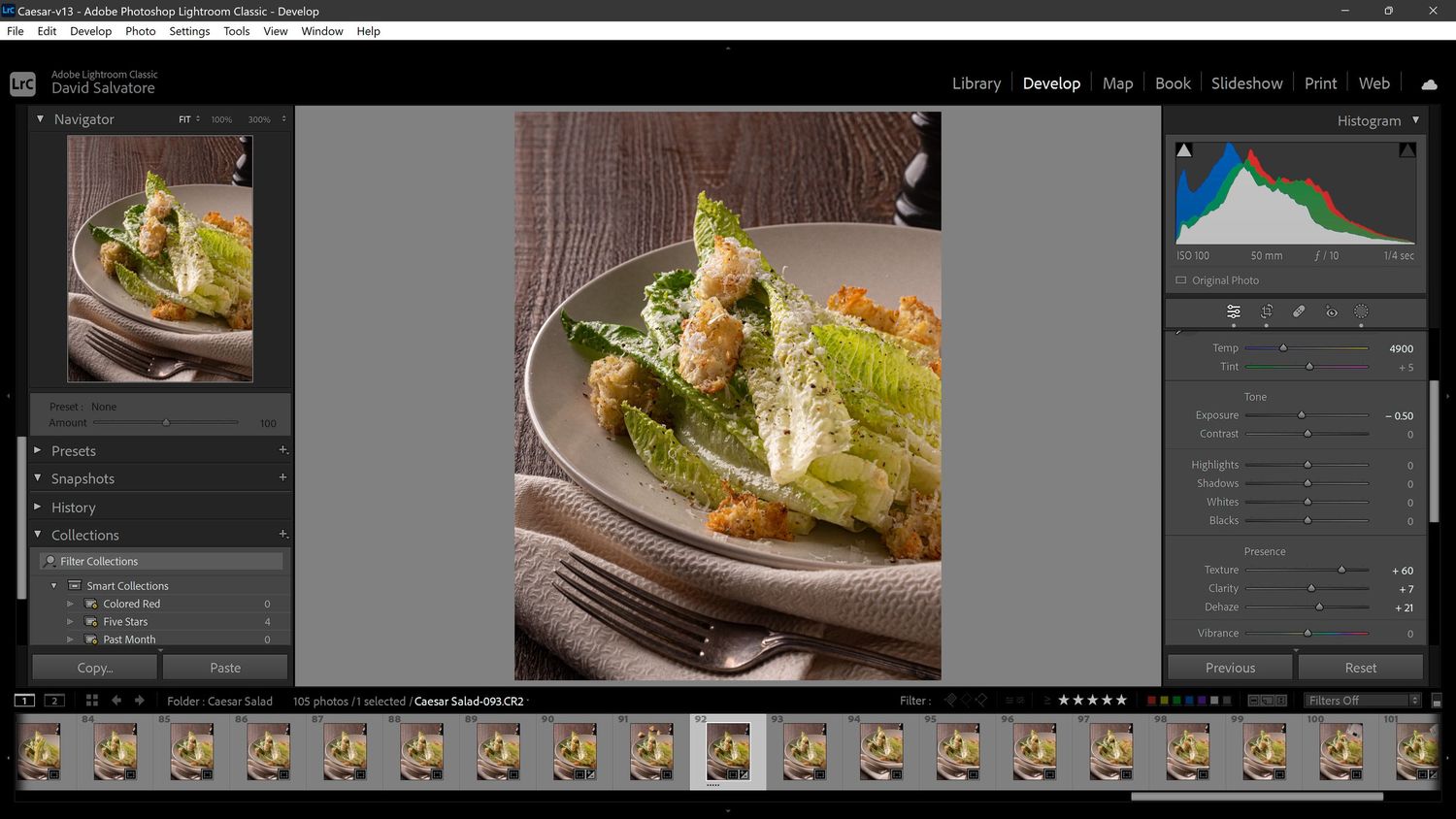
Every shoot is done tethered — my camera connects directly to a color-calibrated 4K OLED laptop rather than relying on the camera's small screen to judge the shot. Food photography demands precision that's simply impossible to judge on a 3-inch display: subtle color shifts, fine texture, the exact sheen on a sauce. With the laptop color calibrated beforehand and Adobe Lightroom connected live, I can see exactly how each shot will look, and keep color and lighting consistent
across every frame in the shoot.